
An evaluation spans several conversations.
Your champion wants a demo. A technical reviewer has questions. The budget owner joins later. A stage change alone does not explain what each person needs before they can decide.
Your champion wants a demo. A technical reviewer has questions. The budget owner joins later. A stage change alone does not explain what each person needs before they can decide.
Before a follow-up, the team needs the latest questions, commitments, and contacts. When each seller holds a different piece, preparing an answer means reconstructing the opportunity together.
The customer’s priorities do not disappear when the contract is signed. Onboarding needs the story behind the purchase, including the expectations established during the evaluation.
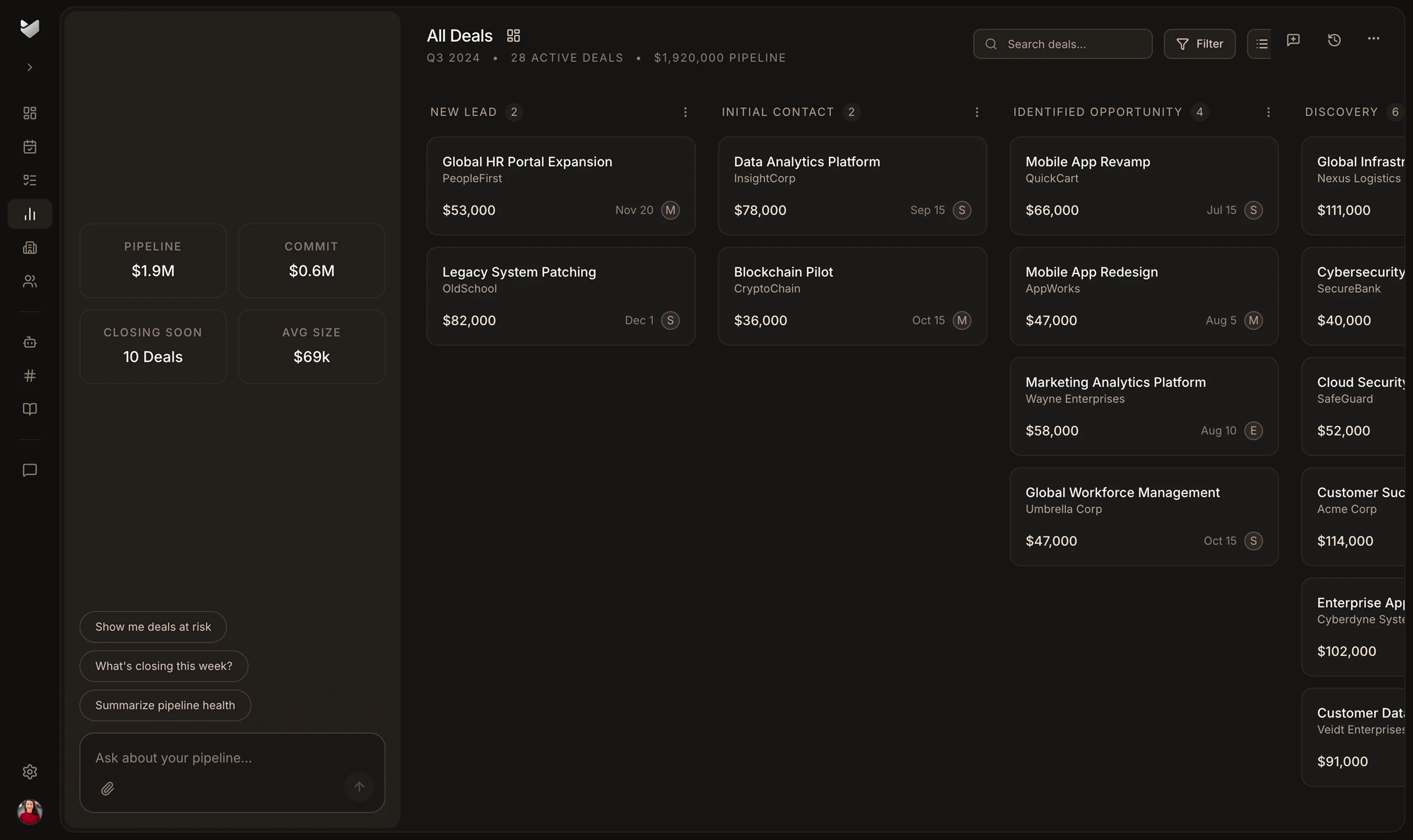
Review the connected calls, emails, meetings, and contacts. Agree which buyer question the conversation should resolve and who on your team will take it forward.
Use the SaaS pipeline to locate the opportunity, then inspect the customer context and AI follow-up recommendations. Discuss the next action rather than relying on a stage label alone.
Use the accumulated customer history to brief the next owner. Confirm the commitments and next steps together before involving the customer in another conversation.
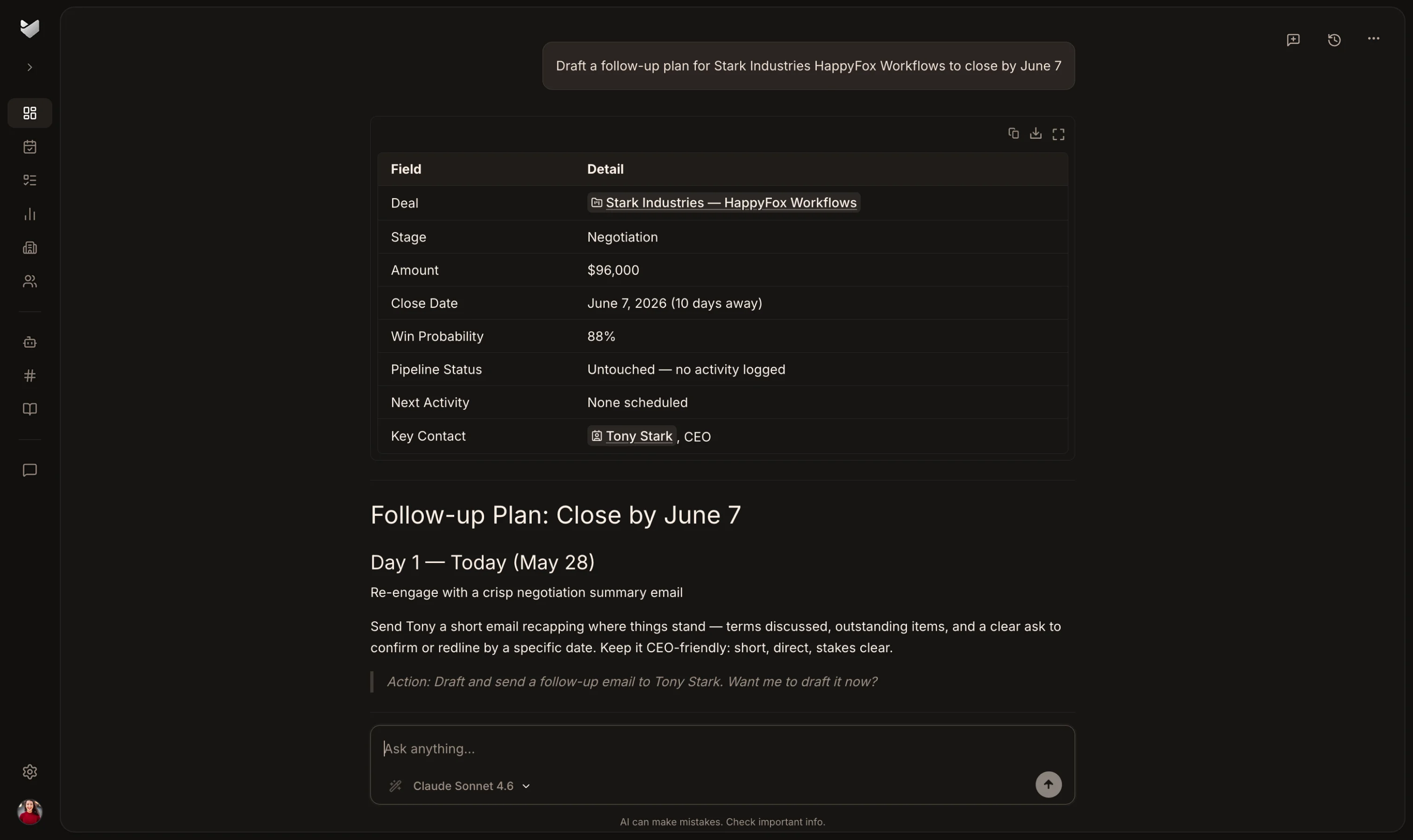
Review the priorities discussed during the evaluation. Give onboarding the context behind the purchase so the first conversation after the sale starts from the customer’s expectations.
Walk through the connected contacts and interactions. Confirm who is involved, which questions were addressed, and who should be part of the next meeting.
Agree what happens after the handoff and who is responsible. Use the customer history as the shared starting point instead of expecting the next owner to reconstruct the sale.
HappyFox CRM connects calls, emails, meetings, contacts, and next steps with the deal. A shared history gives sellers a starting point for preparing meetings and reviewing what should happen next.
The CRM starts with SaaS pipelines and fields that you can adjust. Revenue playbooks include MEDDIC. Review the structure against your qualification process and the information your team needs to make a decision.
AI uses the available customer context to surface follow-ups that need attention. The seller reviews the recommendation and decides how to act; the team still owns the relationship and sales judgment.
Use the history collected during the evaluation to discuss contacts, priorities, and commitments. Agree your handoff requirements with onboarding and check that a representative deal provides the context they need.
Choose one opportunity with several buying roles. Have the seller, manager, and next owner review it together. Check whether they can explain the current conversation and next step from the record. Explore the CRM overview for trial and setup details.