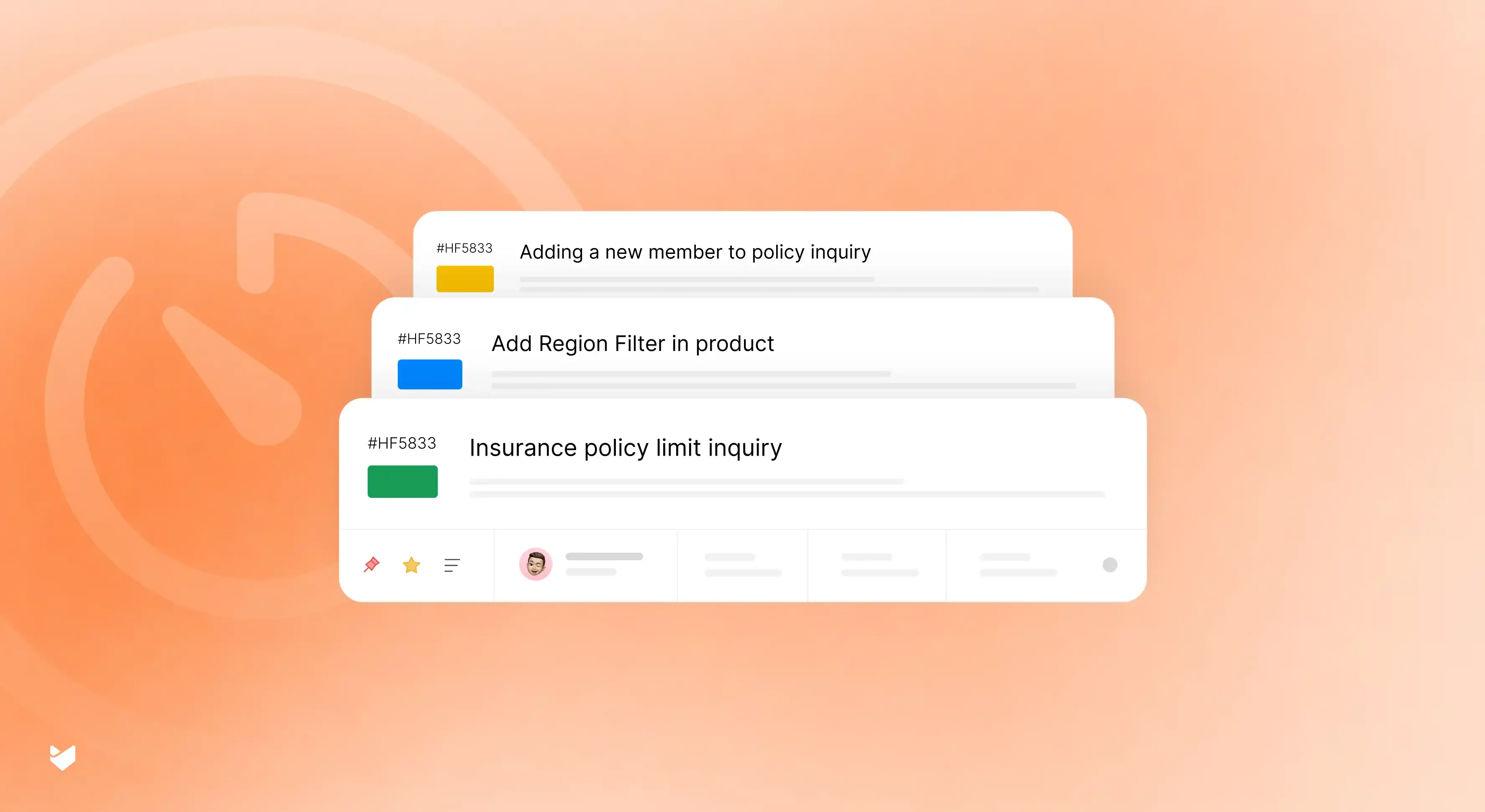
UserVoice is strong for feature voting, but limited for operational workflows.
Growing SaaS and CX teams typically switch because they need:
UserVoice started as a feedback and product idea management platform. While it later expanded into support capabilities, it is still primarily designed around collecting and organizing feedback rather than managing complex customer support workflows.
As companies grow, they often outgrow feedback centric tools for three main reasons.
Feedback tools are not built for advanced ticket operations like splitting tickets, merging conversations, cloning requests, bulk updates, or mass replies.
Modern support teams rely on response time targets and resolution SLAs. Without structured SLA management, maintaining accountability becomes difficult.
Feedback platforms lack the automation depth required for skill based routing, workload balancing, escalation rules, and advanced reporting.
If your team is juggling multiple inboxes, managing escalations manually, or struggling with visibility, it may be time to switch to a purpose built help desk.
If you are exploring options, here are the leading alternatives categorized by focus.
Excellent for idea prioritization and feature planning. Limited support workflow depth.
Great voting and idea management. Not a full support solution.
Strong in in-app guidance and usage analytics. High pricing tier.
Combines feedback forums with structured ticket resolution, SLA tracking, automation, and reporting.
| Tool | Core Focus | Starting Price | Best For |
|---|---|---|---|
| HappyFox | Unified help desk + feedback workflows | From $9/agent | Mid-market SaaS, CX, IT teams |
| Canny | Feature voting board | From $50/month | Startups building in public |
| Productboard | Product roadmap management | From $25/month | Structured product teams |
| Aha! | Roadmap + product management | From ~$24/user/month | Advanced PM teams |
| Pendo | Product analytics + engagement | From ~$499/month | Enterprise SaaS |
| Hotjar | Behavior analytics | From $39/month | UX teams |
| Upvoty | Simple voting board | From $15/month | Budget startups |
HappyFox is a unified help desk and service management platform designed for growing support, CX, and IT teams. Unlike standalone feature voting tools, it connects customer feedback directly to real ticket workflows across email, chat, voice, social media, and support portals. Teams can automate routing, enforce SLAs, and track performance from one centralized dashboard. It is built for operational scalability, not just idea collection.
Omnichannel inbox, Smart Rules automation, round-robin and skill-based routing, SLA management, AI Copilot, reporting dashboards, asset management, multi-brand support, SOC 2 and GDPR compliance.
Starts at $9 per agent per month (pricing varies by plan and features).
Mid-market SaaS, ecommerce, healthcare, education, and IT teams needing unified feedback plus full ticket automation.
Canny is a modern feature request management platform focused on public voting boards and roadmap transparency. It helps product teams collect ideas, prioritize features based on votes, and communicate updates to users. The platform is simple to deploy and visually clean, making it popular with startups building in public. However, it is primarily product-focused rather than operationally driven.
Voting boards, public roadmap, changelog, customer profiles, integrations with Slack and project tools.
Free plan available; paid plans start at $50 per month, higher tiers scale by seats.
Startups and product-led teams prioritizing public feature voting and roadmap transparency.
Productboard is a customer-driven product management suite that connects user feedback to structured roadmap planning. It allows product managers to centralize feedback, prioritize features using frameworks, and align teams around product strategy. The platform integrates well with development tools like Jira and collaboration tools like Slack. It is built for strategic product operations rather than support workflows.
Centralized feedback hub, prioritization frameworks, roadmap visualization, Jira integration, customer insights tagging.
Free plan available; paid plans start at $25 per maker per month.
Structured product teams that need roadmap planning tied directly to customer insights.
Aha! is a comprehensive product planning platform that combines idea portals, roadmap management, and agile workflows. It enables teams to collect feedback, manage initiatives, and connect strategy to execution. The system is robust and feature-rich, which makes it powerful but potentially complex to configure. It is best suited for mature product organizations with defined processes.
Idea portal, roadmap management, agile workflows, task management, reporting, integrations.
Plans typically start around $24 to $74 per user per month depending on tier.
Mature product management teams requiring structured planning and strategic roadmapping.
Pendo is a product experience platform that combines analytics, in-app messaging, and feedback collection. It allows companies to understand user behavior, guide users through onboarding, and collect sentiment data. Pendo is significantly broader than a simple voting board and focuses heavily on product engagement analytics. It is generally positioned for enterprise SaaS companies.
User behavior analytics, in-app guides, feedback collection, sentiment analysis, custom dashboards, roadmap visibility.
Free plan available for limited users; paid plans typically start around $499 per month, with enterprise pricing varying widely.
Enterprise SaaS companies seeking advanced product analytics and engagement tracking.
Hotjar is a behavioral analytics tool that focuses on understanding how users interact with websites and applications. Instead of prioritizing feature voting, it provides visual insights through heatmaps and session recordings. It also includes feedback polls and surveys to capture contextual user input. It is primarily a UX research and optimization tool.
Heatmaps, session recordings, feedback polls, surveys, user interviews, funnel analysis.
Free plan available; paid plans start at $39 per month.
UX and growth teams focused on behavior analytics and conversion optimization.
Upvoty is a lightweight feature voting and roadmap platform designed for startups and smaller teams. It enables customers to submit ideas, vote on features, and view roadmap updates. The platform is simple and affordable but lacks advanced segmentation and automation capabilities. It focuses on idea ranking rather than workflow management.
Feedback boards, voting system, custom statuses, moderation tools, widgets, roadmap view.
Paid plans start at $15 per month.
Small startups and budget-conscious teams wanting simple feature voting functionality.
Start with your operational workflow.
If feedback is purely strategic for roadmap prioritization, a voting board may suffice.
If feedback connects to support tickets, SLAs, churn risk, and account value, you need deeper automation and reporting.
Ask yourself:
Also consider scalability. If your support team grows from 10 to 100 agents, will the platform handle automation and reporting without becoming complex or expensive?
For mid-market teams juggling IT, HR, Facilities, and Customer Support workflows, unified service management often delivers better long-term ROI than standalone feedback tools.
Smart routing, escalation rules, and dynamic assignment.
Email, chat, voice, WhatsApp, social, and portal integration.
Custom SLAs by category, status, or priority.
Salesforce, HubSpot, Slack, Jira, Zapier, Shopify, CRM and project tools.
Resolution time, CSAT, lifecycle reports, ticket distribution.
SOC 2 Type II, GDPR, encryption, SSO, role-based access.
Response drafting, summarization, and triage automation.
Custom workflows, multi-brand support, unlimited growth flexibility.
Most UserVoice alternatives focus on feature voting and roadmap transparency. But growing support and IT teams need operational control - not just idea collection.

Mass Reply

Delete Tickets

Move Tickets

Add Tags

Quick Reply

Split Tickets

Link Tickets

Bulk Updates

Clone Tickets

Forward Tickets
Add Subscribers

SLA Management
Native Android App

Scheduled Reports

Custom Contact Information

Contact Groups

Multibrand Helpdesk

Customer Portal
HappyFox is the simplest of all the ticketing systems around.
I will never use any other system
ever!
Jason Armstrong,
ORD Capital
UserVoice helped define feature voting. But growing SaaS and support teams need more than an idea board.
The right UserVoice alternative should unify feedback, automate ticket routing, enforce SLAs, integrate with your tech stack, and provide actionable reporting.
If your organization is scaling beyond simple product voting and needs operational control across support and IT workflows, platforms like HappyFox provide a more complete solution.
Feedback should not live in isolation.
It should power real service outcomes.