













10 Best Support Ticket Software in 2026: Features, Pricing & Reviews

Shalin
Founder & CEO HappyFox
March 05, 2026
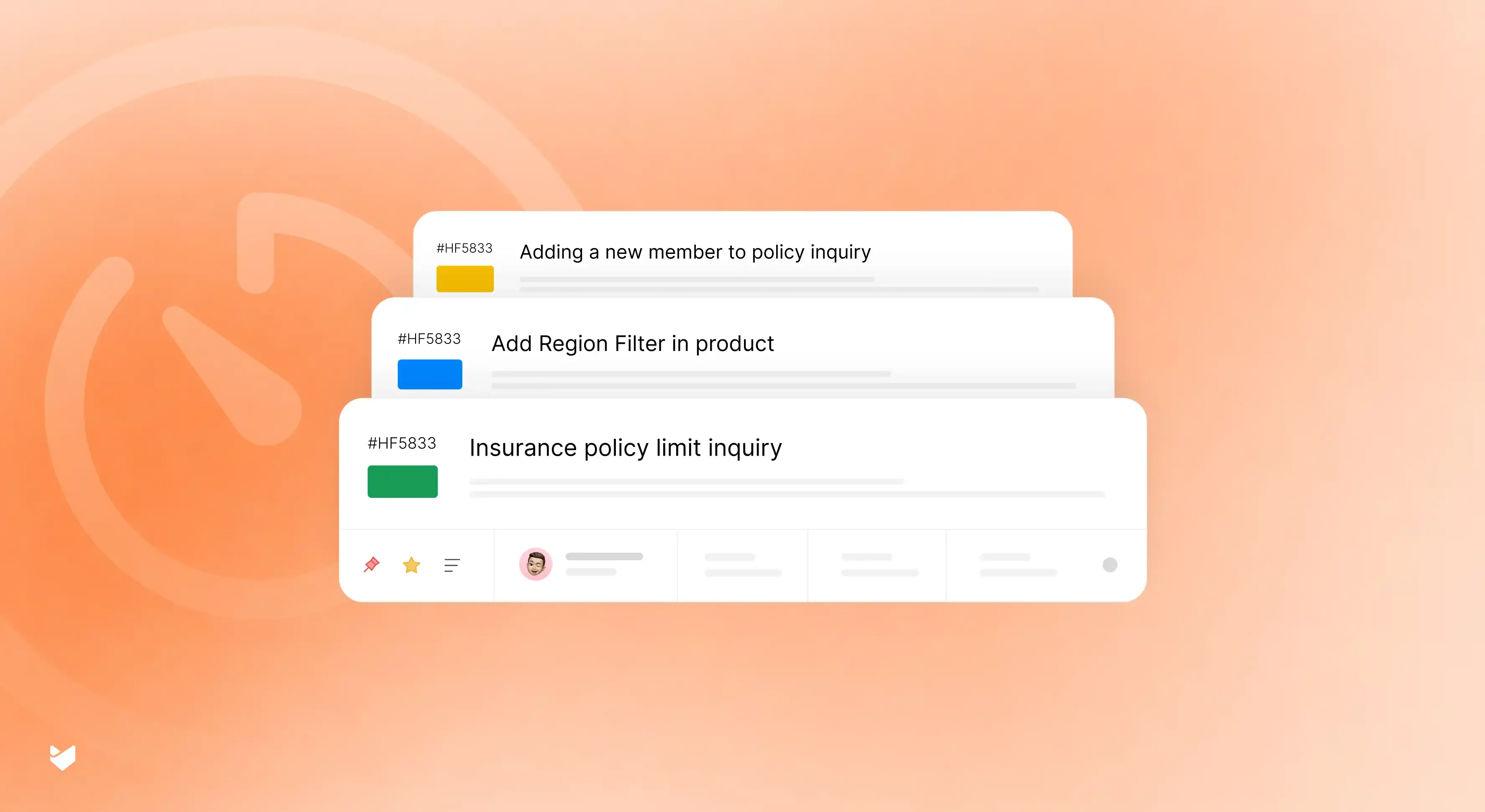
Support ticket software is a centralized system that helps businesses manage, track, prioritize, and resolve customer or internal service requests across multiple channels.
If your team is drowning in email threads, juggling spreadsheets, or relying on homegrown workflows, you already know the chaos that comes with scaling support. As ticket volumes grow, manual routing breaks down, SLA breaches increase, and visibility into performance disappears.
The best support ticket software in 2026 does more than convert emails into tickets. It automates repetitive tasks, enforces SLA policies, integrates with your CRM and business tools, and provides real-time reporting that helps you scale operations with confidence.
Whether you're running a SaaS company supporting thousands of users, an IT team handling internal service requests, or a growing ecommerce brand managing multichannel support, choosing the right ticketing system directly impacts response times, customer satisfaction, and operational efficiency.
To help you make an informed decision, we’ve evaluated the top support ticket software solutions based on automation depth, omnichannel capabilities, reporting strength, integrations, pricing, and scalability.
TL;DR
If you’re short on time, here’s a quick breakdown of the best support ticket software in 2026:
- Best overall for scaling teams: HappyFox
- Best for enterprise flexibility: Zendesk
- Best for growing SMBs: Freshdesk
- Best budget-friendly option: Zoho Desk
- Best for email-centric teams: Help Scout
- Best collaborative inbox: Front
- Best for IT help desks: Spiceworks
- Best for live chat-heavy support: LiveAgent
- Best for customer journey tracking: Kayako
The right platform depends on your ticket volume, automation needs, integration requirements, and long-term scalability goals. If you’re growing beyond manual routing and need strong SLA enforcement, automation, and omnichannel support, prioritize platforms built for operational depth.
How We Evaluate the Best Support Ticket Software
Choosing the best support ticket software isn’t just about feature checklists. We evaluated each platform based on real-world operational needs for growing SaaS, IT, and customer support teams.
Our assessment focused on the following criteria:
We examined how effectively each platform reduces manual work. This includes rule-based ticket routing, SLA enforcement, time- and event-based triggers, workflow customization, and escalation capabilities. Tools that support advanced automation scored higher.
Support teams need structured response commitments. We evaluated SLA timers, breach alerts, priority management, custom statuses, ticket queues, and lifecycle tracking to determine how well each system supports operational accountability.
Modern support extends beyond email. We assessed whether tools centralize conversations across email, chat, voice, social media, and messaging channels into a unified ticketing system.
A ticketing system must integrate with CRM platforms, project management tools, ecommerce systems, communication apps, and SSO providers. We reviewed integration depth and API flexibility to measure ecosystem strength.
We analyzed the quality of reporting dashboards, SLA compliance reports, ticket inflow tracking, agent performance insights, and customer satisfaction metrics to determine visibility into support operations.
Growing teams need flexibility. We considered multi-brand support, role-based permissions, workflow customization, asset management capabilities (for IT teams), and pricing scalability across small and enterprise teams.
Finally, we compared pricing transparency, feature availability across plans, and overall value relative to capabilities.
Top 10 Support Ticket Software

HappyFox


HappyFox Help Desk stands out in the support ticket software category by combining its comprehensive helpdesk ticketing capabilities with the platform's signature ease-of-use and intuitive design. Serving over 2,000 organizations across 70+ countries, HappyFox Help Desk is versatile enough to cater to a wide variety of teams and industries, making it a top choice for businesses seeking to optimize their customer support operations.
HappyFox Help Desk ticketing system enables you to offer omnichannel support, centralizes all your incoming requests and puts you in control. You can sort and route incoming tickets based on categories, organize and prioritize your tickets with custom statuses and queues, and track all conversations and actions in one place with ticket threads.
Moreover, HappyFox Help Desk simplifies your support workflows with various automation and customization options, allowing for a highly efficient and tailored customer support experience.
Key Features
-
Omnichannel ticketing:
Converts requests from email, web, phone, chat, and social channels into tickets.
-
Knowledge base:
Set up a fully customizable support centre and offer rich KB resources that are easy to create, search and share.
-
Automations:
Get a wide variety of options including smart automations based on time and event triggers, canned actions (macros), SLA management, tasks & ticket templates, auto assignment, ticket scheduling, agent scripts and CSAT surveys.
-
Collaboration:
Ticket threads with private note and agent collision detection functionalities allows for better collaboration.
-
Integrations:
HappyFox Help Desk integrates with over 50 popular SaaS applications across CRM project management, accounting, SSO, marketing and many other categories.
-
Reporting:
Get ready-to-use advanced reports around ticket inflow, distribution, agent activity, performance, SLA’s, automations and customers.
-
Multi Brand Help Desk:
Centrally manage multiple brands under one help desk. Personalize each brand’s customer support portal, forum, and knowledge base with exclusive branding, logos, and content structures.
Pros
- Offers full-stack customer support solutions for all teams in a firm
- Offers great customization flexibility to tailor solutions that meet diverse business requirements.
- Features an intuitive interface that simplifies navigation and operation, making it easy to use for users of all skill levels.
- All teams, including the CEO, are involved in customer support processes. This ensures escalations are addressed faster and issues resolved quicker.
- Best-in-class AI capabilities with a consultative approach to tailor them to your business needs and goals.
- For larger teams, offers unlimited agent plans that start at $1999/month
Cons
- Social media connections limited to Facebook and Twitter
- Some features such as asset management only available on higher plans.
Pricing


If you need a ticketing system for customer support and collaborative email, HappyFox is the best there is!
Michael Ihns
President, Improved Racing

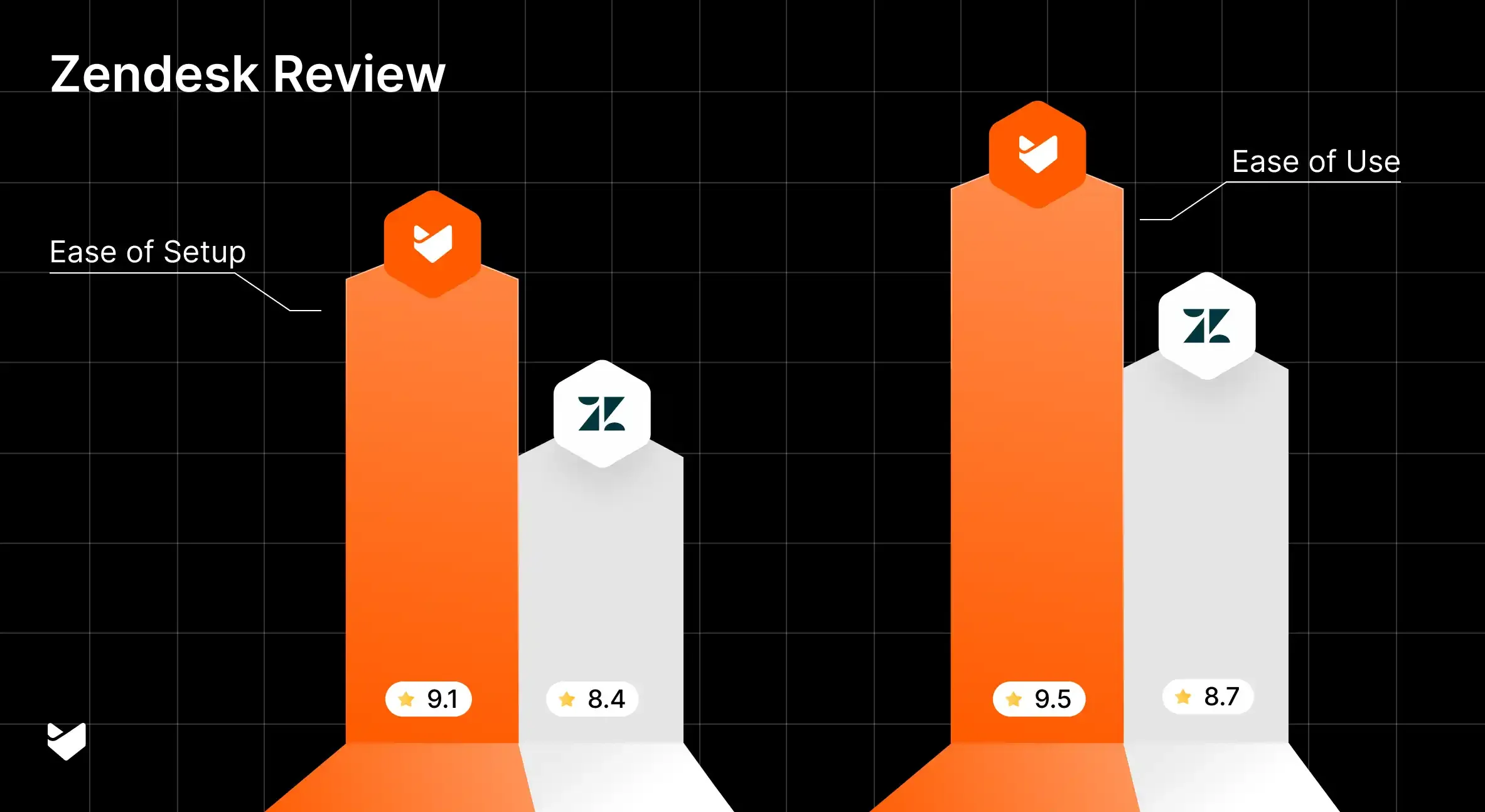
Zendesk
Zendesk Support is a well-known and widely used ticketing system that aggregates tickets from multiple support channels. Catering to businesses of all sizes, it delivers a robust ticketing system that simplifies interactions between customers and support teams through streamlined processes and effective communication tools. It provides advanced reporting capabilities that will help you make informed decisions about how to tackle support bottlenecks that impact service operations. It also has a powerful automation suite with time-based and condition-based triggers.
Key Features
-
Omnichannel support: email, chat, social media, phone
-
Self-service options: knowledge base, community forums
-
Ticketing with automations, routing, and SLA management
-
Reporting and analytics for data-driven decisions
-
Agent collaboration tools and training resources
Pros
- Scalable and customizable platform for growing businesses
- Powerful automation capabilities to streamline workflows
- Comprehensive reporting and analytics for insights
- Large app marketplace for extensibility
Cons
- Customer service is frequently described as non-existent and slow
- Pricing can be complex for larger teams with additional features
- UI is considered cluttered, making customization and navigation challenging
- Steeper learning curve compared to some simpler options
Pricing

Freshdesk
Freshdesk makes customer support accessible and efficient with its user-friendly interface and comprehensive toolset. Designed to meet the demands of both small businesses and large enterprises, it enhances customer interactions through automation, self-service options, and multi-channel support, ensuring that every customer query is addressed promptly and effectively.
Key Features
-
Unified ticketing system that converts requests from email, web, phone, chat, messaging, and social into tickets.
-
Self-service options with knowledge base and community forums
-
Automates ticket assignment, prioritizes tickets, and offers agent assist features along with canned responses to streamline the support process
-
Enhances team collaboration by allowing agents to work together efficiently on ticket resolution
-
Offers predictive capabilities to forecast incoming ticket volume, first response time, and resolution time metrics based on historical data
-
Provides comprehensive reporting and analytics
Pros
- User-friendly interface with easy onboarding and use
- Extensive integration options
- Scalability for businesses of all sizes
- Strong mobile app for agent flexibility
Cons
- Customization options may be limited compared to some competitors
- Reporting features may not be as advanced for complex needs
- Can be slow, with ticket loading times and latency occasionally impacting efficiency
- Contact management and search functionality considered sub-par
Pricing

Help Scout
Help Scout focuses on providing a more personal customer support experience. With its emphasis on simplicity and effectiveness, it offers support teams the tools they need to build better relationships with customers, including customizable support options and detailed insights into customer needs. It focuses on shared inboxes and team collaboration, fostering a more personal approach to customer support. Help Scout is a great choice for businesses looking to provide a human touch.
Key Features
-
Shared inboxes for collaborative support
-
Conversational ticketing with threaded conversations
-
Built-in live chat and email functionality
-
Customer satisfaction surveys and feedback tools
-
Knowledge base creation and management
Pros
- Shared inbox model fosters teamwork and collaboration
- Conversational ticketing creates a more natural flow of communication
- Built-in live chat and email simplify support channels
- Focus on customer satisfaction through surveys and feedback
Cons
- Limited automation and workflow customization compared to some options
- May not be ideal for complex ticketing needs with high volume
Pricing
We also recommend reading:
Recommend Reading
5 Telltale Signs It’s Time to Upgrade Your Help Desk Software


Hiver
Hiver transforms Gmail into a powerful customer support hub, enabling teams to manage shared inboxes without leaving their familiar workspace. It's designed for teams looking for a straightforward, efficient way to handle customer emails, offering collaboration tools and analytics to improve response times and service quality.
This collaborative email ticketing system leverages your existing email infrastructure while offering advanced features for managing customer inquiries. Hiver is a great choice for teams already comfortable with email workflows.
Key Features
-
Collaborative ticketing with shared inboxes and agent assignment
-
Automated email routing and prioritization
-
Canned responses and email templates for faster replies
-
Internal notes and communication within threads
-
Reporting and analytics on team performance and ticket resolution
Pros
- Seamless integration with existing email workflows
- Collaborative ticketing fosters teamwork and shared ownership
- Affordable pricing based on team size
- Easy to learn and use with minimal training needed
Cons
- Limited self-service options compared to some platforms
- May not be ideal for complex support needs with high volume
- Limited reporting and analytics functionality
Pricing

Spiceworks
This comprehensive IT help desk solution caters specifically to the needs of IT teams. Spiceworks support ticket software offers ticketing via email, through the self-service portal, or in the agent user interface. Advanced features include ticket collaboration, ticket auto-assignment, and the ability to add custom fields on tickets. Spiceworks offers an editable customer portal where customers can submit tickets, track their progress, and view help articles.
Key Features
-
IT asset management and tracking
-
Ticketing system with incident management and resolution tracking
-
Network monitoring and alerting for proactive problem identification
-
Self-service portal for end-user troubleshooting
-
Reporting and analytics for IT team performance
Pros
- Feature-rich platform tailored for IT support needs
- Asset management simplifies device tracking and maintenance
- Network monitoring allows for proactive issue identification
- Free and open-source version available with paid plans for additional features
Cons
- Steeper learning curve compared to some simpler options
- Primarily focused on IT support, might not be suitable for general customer service needs
- Free version has limited functionalities
Pricing

Live Agent
Live Agent is all about bringing speed and efficiency to customer support operations. It combines ticket management, live chat, and a knowledge base in one platform, enabling businesses to deliver fast and personalized support across various channels. Live Agent is a great choice for situations where real-time communication is crucial.
Key Features
-
Live chat functionality with customizable chat widgets
-
Chat routing and agent assignment based on availability and skills
-
Chat history and transcripts for future reference
-
Pre-chat surveys for better visitor understanding
-
Reporting and analytics on chat performance and agent activity
Pros
- Real-time chat support fosters immediate customer interaction
- Chat routing ensures efficient agent assignment
- Pre-chat surveys provide valuable customer context
- Affordable pricing plans for businesses of all sizes
Cons
- Limited ticketing functionality compared to some platforms
- Not ideal for handling complex support inquiries
- Relies heavily on real-time availability of agents
Pricing
We also recommend reading:
Ticket to Success: AI-Powered Business Optimization Over Time


Front
Front revolutionizes email management for customer support by turning emails into tickets. This approach allows for better organization, collaboration, and tracking of customer interactions, making it ideal for teams that rely heavily on email for support.
Key Features
-
Unified inbox for managing email, chat, and SMS conversations
-
Shared inboxes and team collaboration features
-
Internal notes and annotations for collaborative communication
-
Integrations with various CRMs and productivity tools
-
Reporting and analytics on team performance and communication metrics
Pros
- No context switching and streamlined workflows
- Better collaboration and knowledge sharing
- Integrates seamlessly with various business tools
- User-friendly interface with easy onboarding and use
Cons
- Limited ticketing functionality compared to dedicated helpdesk platforms
- Pricing can become expensive for larger teams with multiple features
- May not be ideal for highly technical support needs
Pricing

Zoho Desk
Zoho Desk's focus on automation, efficiency, and customer satisfaction makes it a robust solution. It supports handling customer queries from various channels, including phone, email, live chat, SMS text, and social media, in a unified platform. With its focus on enhancing the customer service experience, Zoho Desk provides tools to automate service processes, distribute tickets intelligently, and analyze performance for continuous improvement. Zoho Desk is a great choice for businesses seeking a comprehensive and budget-friendly customer support solution.
Key Features
-
Multichannel support over phone, email, live chat, SMS, and social media from a single interface
-
Automatically assign tickets to agents based on their department, team, or individual expertise
-
Self-service options including knowledge base and community forums
-
Enable agents to collaborate internally with context
-
Route calls to agents familiar with the customer to maintain consistency
-
Reporting and analytics with customizable dashboards
Pros
- Scalable and affordable solution for growing businesses
- Comprehensive set of features for managing customer support needs
- Built-in self-service options for customer self-resolution
- Inventory management functionalities for ecommerce businesses
Cons
- Customization in Zoho Desk can feel overwhelming due to its extensive options
- User interface for the Admin is cumbersome, not very intuitive and requires additional support to navigate
- Some features may be complex to set up
- Limited customization options in lower-tier plans
- Setting up Zoho Desk and migrating data can be time-consuming due to its complexity
Pricing

Kayako
Kayako is dedicated to helping businesses deliver a unified customer support experience across multiple channels. It stands out with its emphasis on customer journey tracking and engagement, providing teams with the insights they need to offer support that's both proactive and personalized.
Key Features
-
Context-driven Support:
Understand customer journeys for personalized service.
-
Omnichannel Support:
Manage inquiries across all channels seamlessly.
-
Self-Service Options:
Empower customers with a knowledge base and automations.
-
Automations & Workflows:
Streamline tasks and improve agent efficiency.
Pros
- Personalized Support & Efficient Workflows
- Omnichannel Communication
- Self-Service Options & Automation
- Data-Driven Decisions
Cons
- Potentially Higher Pricing
- Steeper Learning Curve
Pricing
We also recommend reading:
Help Desk Software
Help Desk Software – Feature Evaluation Scorecard

How to Choose the Best Support Ticket Software
Selecting the best support ticket software isn’t just about features - it’s about operational scalability. As ticket volume grows, the wrong system can create bottlenecks, SLA breaches, and visibility gaps. Here’s what to prioritize when evaluating platforms.
-
Automation & SLA Management:
Manual ticket routing doesn’t scale. Look for automation capabilities such as smart rules, auto-assignment, skill-based routing, time- and event-based triggers, and automated escalations. Strong SLA management with real-time timers and breach alerts ensures response commitments are enforced as your team grows.
-
Omnichannel Capabilities:
Customers expect support across email, chat, voice, social media, and messaging platforms. The best support ticket software centralizes all channels into one unified inbox, eliminating context switching and fragmented conversations.
-
Integrations:
Your ticketing system should integrate seamlessly with CRM platforms, project management tools, ecommerce systems, SSO providers, and communication apps. Strong integrations prevent data silos and allow customer context to flow across departments.
-
Reporting & Analytics:
Without clear visibility, you cannot optimize support performance. Look for customizable dashboards, ticket lifecycle reports, SLA compliance tracking, agent productivity insights, and CSAT measurement to guide data-driven improvements.
-
Scalability & Customization:
As teams grow, workflows become more complex. Choose a platform that supports custom ticket fields, multi-brand management, role-based permissions, API access, and workflow customization to future-proof your support operations.
Key Features to Look For in Support Ticket Software
Not all ticketing systems offer the same operational depth. Here are the features that matter most when evaluating the best support ticket software.
-
Omnichannel Inbox:
Centralizes email, chat, phone, messaging apps, and social media into a unified ticketing interface.
-
Automation & Smart Routing:
Supports auto-assignment, skill-based routing, time- and event-based triggers, ticket scheduling, and workflow customization to reduce manual effort.
-
SLA Management:
Enforces response and resolution commitments with real-time timers, escalation rules, and breach alerts.
-
Knowledge Base & Self-Service:
Empowers customers and employees to resolve common issues independently, reducing ticket volume and improving efficiency.
-
Reporting & Analytics:
Provides dashboards for ticket inflow, SLA compliance, agent performance, CSAT scores, and lifecycle tracking.
-
Integrations:
Connects with CRM platforms, ecommerce systems, project management tools, communication apps, SSO providers, and other business software.
-
Scalability & Customization:
Supports multi-brand environments, custom ticket fields, role-based permissions, API access, and workflow flexibility.
-
AI Assistance:
Includes AI-powered response suggestions, summarization, triage support, and automation enhancements to improve agent productivity.
Why HappyFox Is the Best Fit for Growing Teams
While many platforms offer ticket management, HappyFox stands out for its balance of automation depth, usability, and scalability - making it particularly well-suited for growing SaaS, IT, and mid-market support teams.
-
Built for Operational Control:
HappyFox provides advanced Smart Rules automation, skill-based routing, SLA timers, escalation triggers, and custom workflows. This allows teams to eliminate manual triage and maintain structured service levels as ticket volume increases.
-
True Omnichannel Support:
Requests from email, chat, phone, social media, and web forms are centralized into one unified ticketing system. Teams avoid context switching and maintain full visibility across conversations.
-
Advanced Reporting & Visibility:
With ready-to-use dashboards for ticket inflow, SLA compliance, agent productivity, and customer satisfaction, leaders gain actionable insights to continuously optimize support performance.
-
Multi-Brand & IT Support Ready:
HappyFox supports multi-brand environments and includes asset management capabilities for IT teams — making it flexible across customer support and internal service operations.
-
Enterprise-Grade Security:
SOC 2 compliance, GDPR adherence, encryption standards, and role-based access controls ensure data security for growing organizations.
-
AI-Powered Efficiency:
HappyFox includes AI assistance for response drafting and ticket summarization, helping teams resolve issues faster while maintaining quality.
For organizations scaling beyond basic shared inbox tools and needing structured automation, SLA enforcement, and cross-team visibility, HappyFox delivers a balanced, future-ready solution without the complexity of heavyweight enterprise systems.
Conclusion
The best support ticket software isn’t just about organizing customer inquiries - it’s about building a scalable support operation that keeps pace with your growth.
As ticket volumes increase, manual routing, disconnected tools, and limited reporting quickly become bottlenecks. The right platform should centralize omnichannel requests, automate repetitive workflows, enforce SLA commitments, and provide clear performance visibility across teams.
While many tools offer basic ticket management, growing SaaS, ecommerce, and IT teams need deeper automation, stronger reporting, and long-term scalability. If you're looking for a solution that balances powerful workflow control with ease of use, HappyFox is built to help your team scale confidently without operational complexity.


FAQs
What features should support ticket software include?
The best support ticket software should offer omnichannel ticketing, automation rules, SLA management, knowledge base capabilities, reporting dashboards, integrations with CRM and business tools, and scalability options such as custom workflows and role-based permissions. Advanced systems also include AI assistance to improve response speed and efficiency.
How much does support ticket software cost?
Support ticket software pricing typically ranges from $9 to $115 per user per month, depending on features and plan tiers. Entry-level plans offer basic ticket management, while mid-market and enterprise plans include advanced automation, SLA controls, integrations, reporting, and multi-brand support. Some platforms also offer free tiers with limited functionality.
What are the benefits of using support ticket software?
Support ticket software centralizes customer and internal service requests into one organized system. It improves response times, enforces SLA commitments, automates repetitive workflows, enhances team collaboration, and provides real-time reporting insights. This leads to improved customer satisfaction and operational efficiency.
What is the difference between help desk software and ticketing software?
Ticketing software focuses on capturing, tracking, and resolving service requests. Help desk software typically includes ticketing functionality along with additional capabilities such as knowledge base management, automation workflows, reporting dashboards, and SLA tracking. In practice, most modern help desk platforms include full ticket management systems.
What is support ticket software?
Support ticket software is a system that helps businesses capture, organize, track, and resolve customer or internal service requests in a structured way. It converts inquiries from email, chat, phone, or social media into trackable “tickets,” ensuring nothing gets lost and every request is assigned, prioritized, and resolved efficiently.